
Tift County Warrant Search Limits
No official online active warrant search was located for Tift County. That is the lead fact for anyone trying to check a name. The published local channel is the Tift County Sheriff's Office public information line for warrants, subpoenas, civil papers, and reports at 229-388-6021. If the question is tied to a court case, the issuing court is just as important as the sheriff line because a warrant can start with Magistrate Court, State Court, Municipal Court, or another court depending on the record type.
The fallback chain is local and practical. Call the sheriff warrant and report line first when the warrant may already be in law-enforcement hands. Call Magistrate Court for criminal arrest warrants, warrant hearings, pre-arraignments, bond hearings, and preliminary hearings. Call State Court for misdemeanor, traffic, appeal, arrest warrant, and search warrant matters. Call Tifton Municipal Court for missed city citation dates or failure-to-pay cases that may have produced a bench or failure-to-appear warrant.
The Tifton Police Department page is one official city source tied to local warrant and public-safety routing.
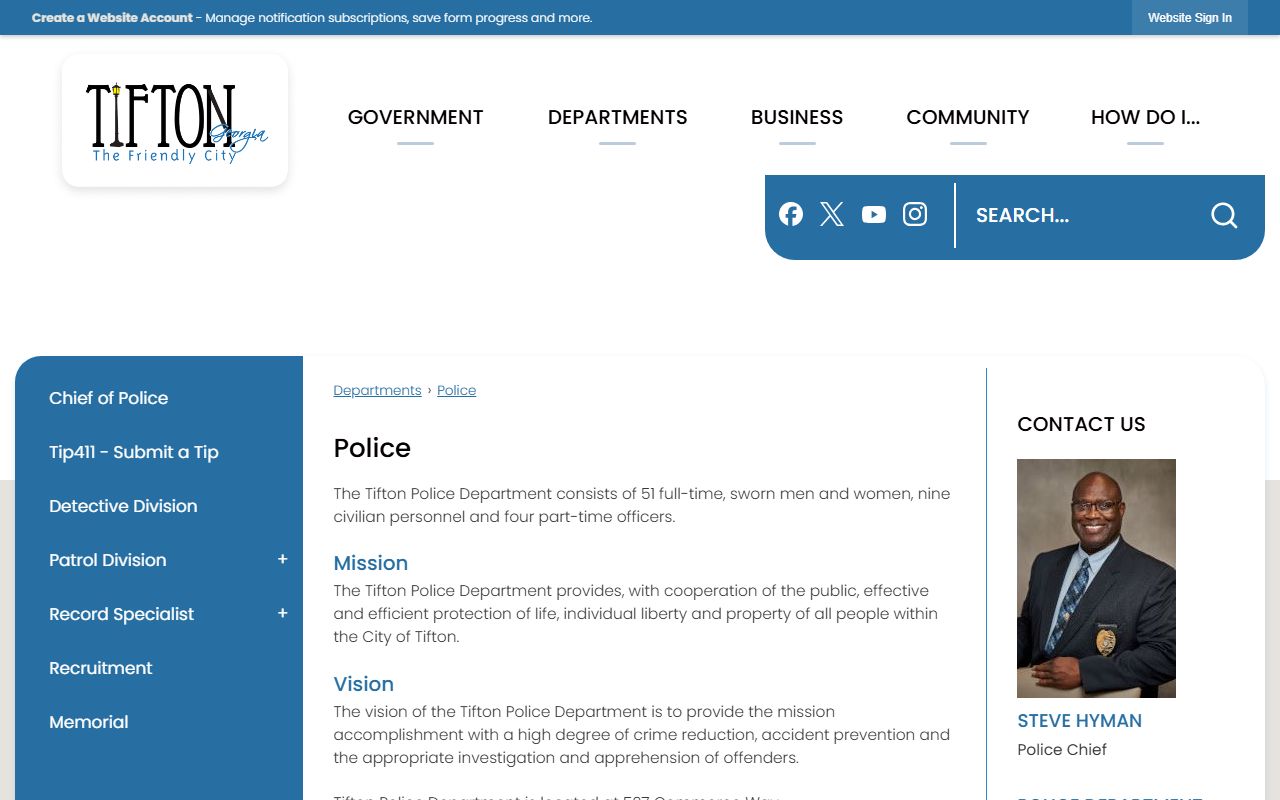
That city police contact source matters when the warrant question begins with a Tifton city incident rather than a county sheriff or State Court case.
Important: Tift County does not publish an official web form for public active-warrant self-checks in the reviewed sources.
Tift County Warrant Contact Chain
A Tift County warrant check should follow the issuing source. The sheriff line can confirm or route warrant, subpoena, civil-paper, and report questions. Magistrate Court is central for arrest warrants and warrant hearings. State Court has jurisdiction over misdemeanors, traffic matters outside city court or transferred from city court by jury demand, Magistrate appeals, and arrest or search warrants. Municipal Court handles city traffic, ordinance, and certain misdemeanor matters, and the city records note that failure to pay or appear can lead to license suspension, warrant issuance, and contempt fines.
| Channel | Use It For | Published Contact |
|---|---|---|
| Tift County Sheriff's Office | Warrants, subpoenas, civil papers, reports, and sheriff open-records routing | 229-388-6021 |
| Magistrate Court | Arrest warrants, warrant hearings, bond hearings, preliminary hearings | 225 Tift Avenue, Room 211; 229-386-7907 |
| State Court | Misdemeanors, traffic outside city court, appeals, arrest warrants, search warrants | 225 North Tift Avenue; 229-386-7921 |
| Tifton Municipal Court | City citation bench or failure-to-pay issues | 130 E. 5th Street; 229-391-3967 |
The Tifton Police Record Division describes how offense reports, accident reports, traffic tickets, and personnel records are entered and filed.
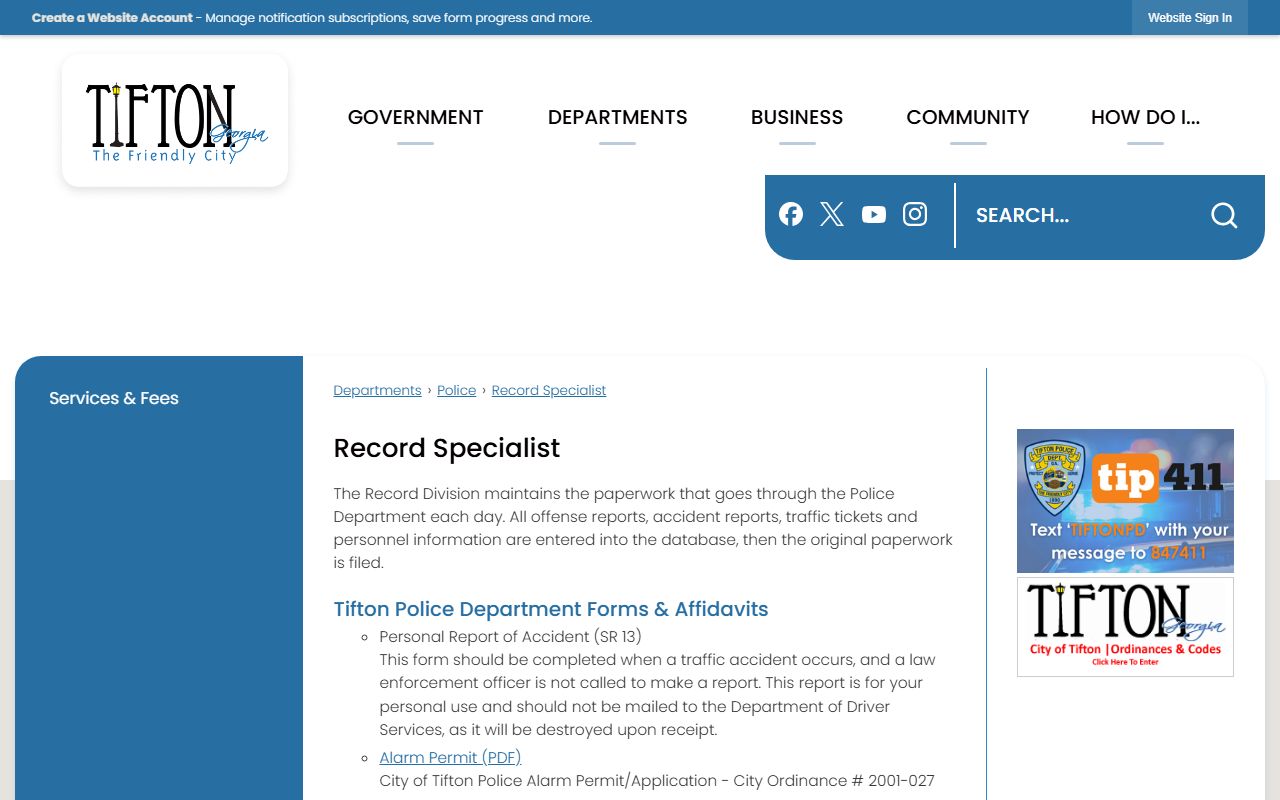
Police records can help identify the incident or ticket path, but they do not replace a sheriff or court warrant-status confirmation.
Note: A warrant tied to a sealed case, juvenile matter, or open investigation may not be released through an ordinary public-record request.
Tift County Warrant Types
Warrant terms can sound alike. In Tift County records, the safest reading starts with who issued the order and why it was issued. A criminal arrest warrant is different from a search warrant. A bench warrant after a missed court appearance is different from a warrant-hearing matter in Magistrate Court. Some records use capias language for an order directing arrest after a failure to appear or failure to satisfy a court obligation.
- Arrest warrant means a court order authorizes arrest based on a criminal allegation or court finding.
- Search warrant means a judge authorized a search for property, evidence, or a place described in the warrant.
- Bench warrant often follows a missed court date, unpaid obligation, or failure to comply with a court order.
- Capias or failure-to-appear warrant directs law enforcement to bring a person before the court.
- Civil contempt or child-support warrant may arise from a civil or family obligation rather than a new criminal charge.
The Tifton Police Services and Fees page lists city police records services, criminal history service, record restriction, fingerprints, and cash bond processing.
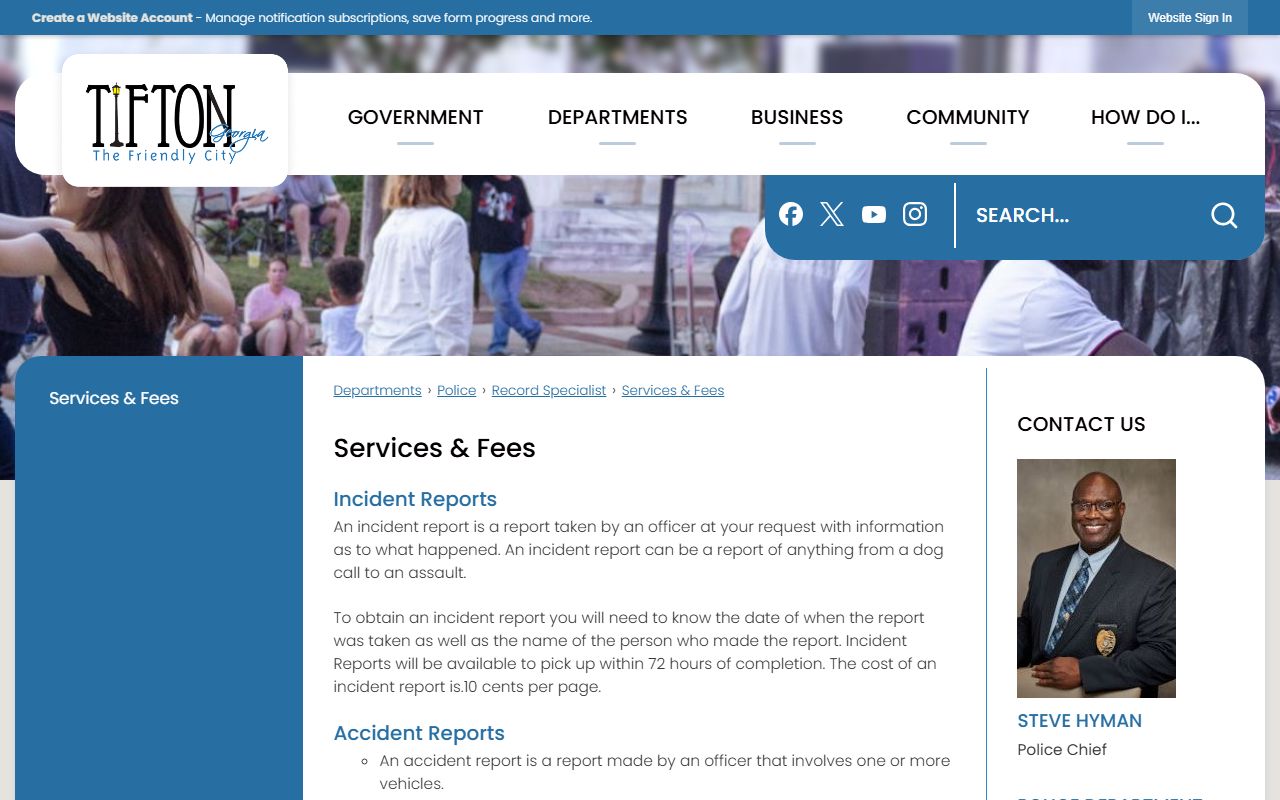
That fees page is useful for city police records connected to an incident, but active warrant clearance still belongs with the issuing court or sheriff channel.
How to Check Tift County Warrants
Because there is no official online active warrant search, the best process is a phone and court-office workflow. Start with the court or law-enforcement office most likely to hold the warrant. Have enough identifying information to avoid a mistaken match, but expect staff to limit what can be released by phone if the record is restricted or requires in-person verification.
- Call the sheriff warrant and report line at 229-388-6021 when the matter may involve an active warrant, civil paper, subpoena, or report.
- Call Magistrate Court at 229-386-7907 for arrest warrants, warrant hearings, bond hearings, and preliminary matters.
- Call Tifton Municipal Court at 229-391-3967 for a missed city ticket, unpaid city fine, or city court appearance issue.
- Call State Court at 229-386-7921 when the matter involves misdemeanor court, traffic outside city court, an appeal, or a State Court warrant.
- Ask whether a bond is set, whether an attorney appearance is allowed, whether surrender is required, and how status updates are confirmed after clearance.
Open-records requests may help with releasable sheriff or police records after an event. Tift County states that open-records requests may be verbal or written and that responses are made under Georgia's open-records law. For a current active warrant, direct contact with the sheriff or issuing court is still the better first step.
Tift County Warrant Field Inventory
No official sample Tift County warrant listing was available in the reviewed sources. The table below uses the research file's field inventory as a request checklist, not as a claim that a public web result displays these fields. Use it when calling the sheriff, Magistrate Court, State Court, or Municipal Court so the same facts are checked each time.
| Field | What to Confirm |
|---|---|
| Name | The person tied to the warrant or court order. |
| Warrant number | The unique warrant identifier if the office can release it. |
| Issuing court | Magistrate, State, Municipal, Superior, or another court. |
| Charge or offense | The alleged offense, missed appearance, or court obligation. |
| Statute | The Georgia or local code section if listed. |
| Case number | The related court case, ticket, or docket number. |
| Warrant type | Arrest, search, bench, failure to appear, probation-related, fugitive, or civil contempt. |
| Bond amount or type | Whether bond is set and what kind of bond applies. |
| Date issued | When the court or judge issued the order. |
| Serving agency | The sheriff, police department, or other agency assigned to serve it. |
| Next appearance | Any court date or next required step after contact or arrest. |
| Hold or detainer | Whether another agency has placed a hold. |
Resolve a Tift County Warrant
Do not rely on a third-party people-search site to clear or rule out a Tift County warrant. The official research points to a sheriff and court fallback chain. A person with a possible warrant should call the sheriff warrant line or the court likely to have issued it, then ask clear questions about bond, surrender, appearance, payment, and attorney options. If the person is arrested or cannot afford counsel in a criminal case, the Public Defender route may apply where eligible.
- Confirm the issuing source through the sheriff or the court tied to the case.
- Ask whether the warrant is active, recalled, served, cleared, or unavailable for public release.
- Ask whether bond is set and whether the court accepts payment, appearance, or surrender as the next action.
- For a missed city citation, contact Tifton Municipal Court before assuming the sheriff line can resolve the court obligation.
- After the matter is handled, confirm with both the court and sheriff that the status was updated.
Clearance timing was not published in official sources. A court may mark a matter cleared before every law-enforcement or records system reflects the change. Keep the court receipt, order, bond paperwork, or clerk confirmation until all offices show the same status.
Tift County Warrant Tips
Tip tools are not warrant lookup tools. Tifton Police publishes Tip411 options for public-safety tips, not official self-check clearance. The city page says a person can text the keyword TIFTONPD plus a tip to 847411, use the Tifton PD app, sign up for public-safety alerts, or fill out a web form. The system strips identifying information before police receive the tip and allows anonymous two-way communication.
The Tifton Police Tip411 page explains anonymous text, app, and web tip methods plus public-safety alerts.
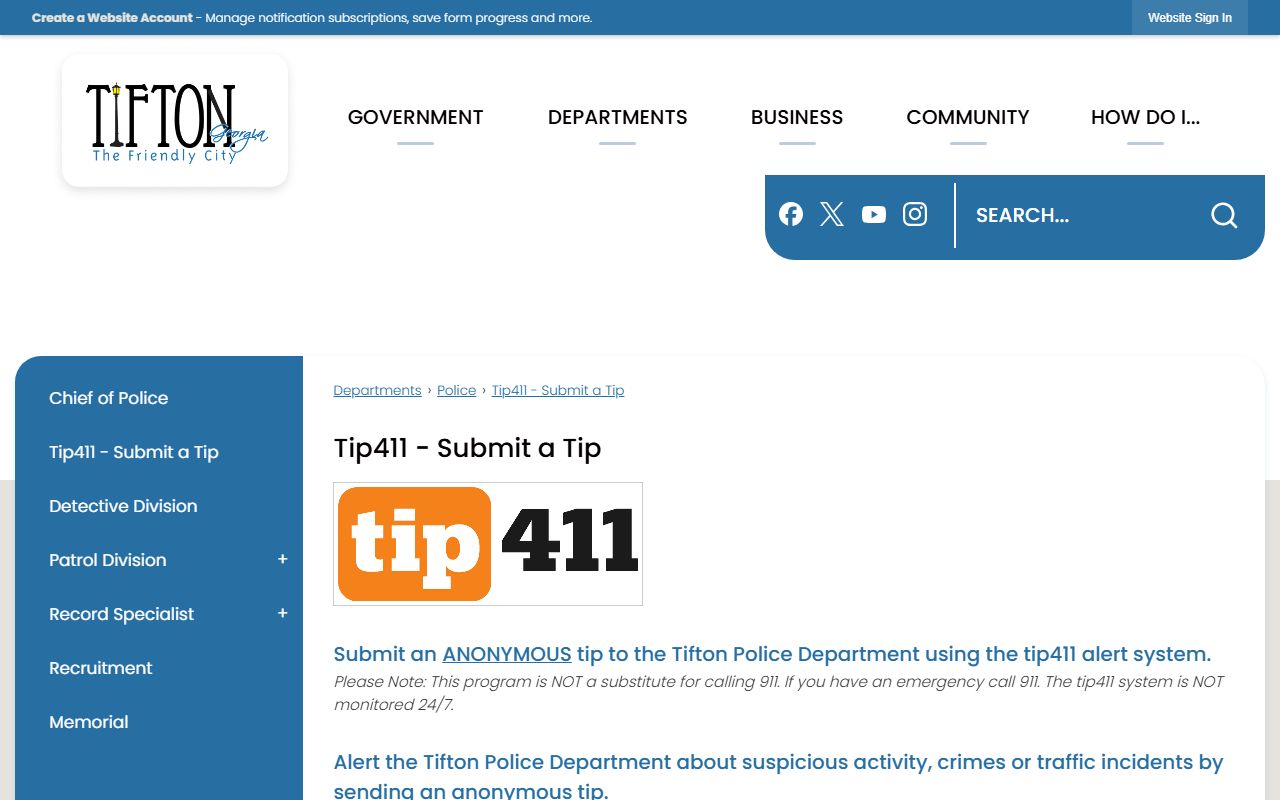
Tip411 is useful for reporting information to police, but it is not monitored around the clock and is not a substitute for 911.
The Tifton PD Google Play listing is another official app source tied to the Tip411 reporting channel.
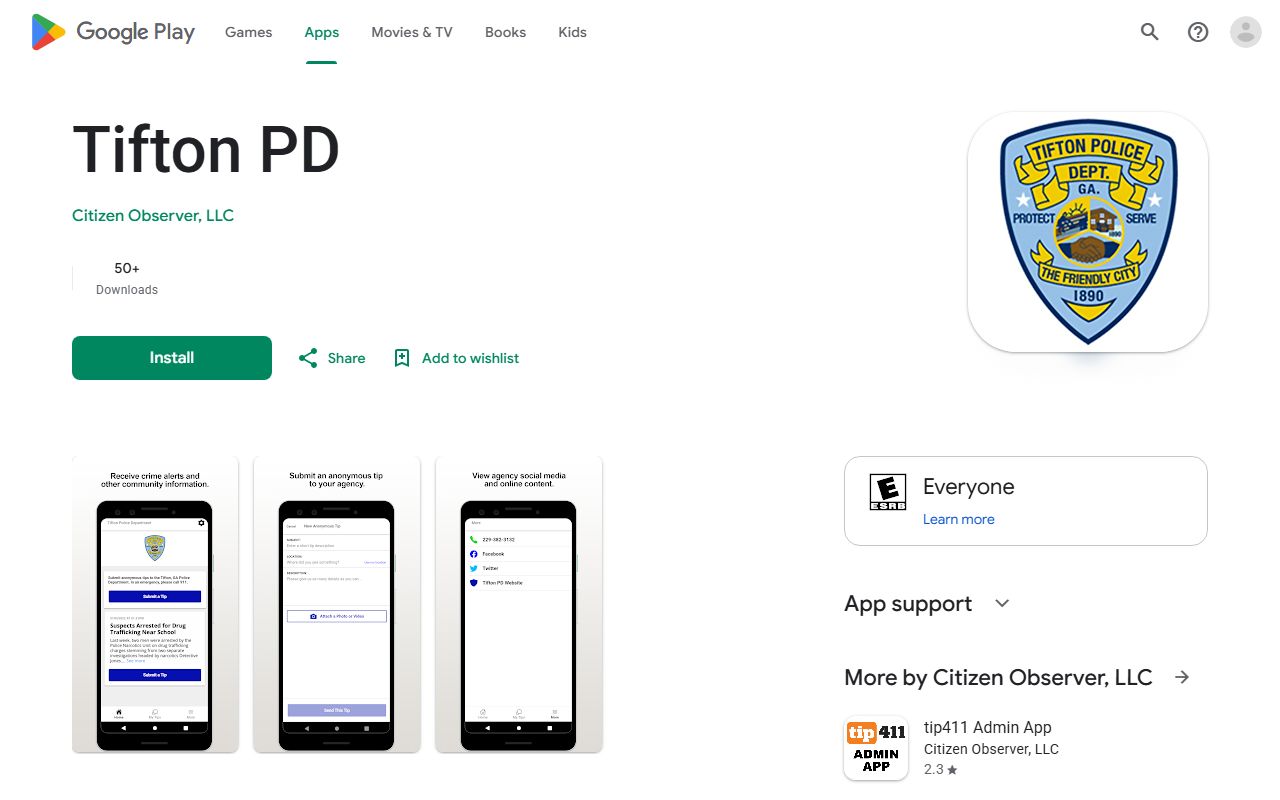
The app source supports the tip and alert channel only; it does not confirm an app-only active warrant search.
Note: The sheriff app also supports tips, reporting, news, and public-safety information, but no official app-only warrant lookup was confirmed.
Restricted Tift County Warrants
Some Tift County warrant records are not ordinary public records. Juvenile law-enforcement and court files are restricted under Georgia juvenile-record provisions. Search warrants may remain sealed or unavailable while an investigation is active. Records tied to protected victims, sealed cases, or sensitive personal identifiers may be redacted under Georgia public-record exemptions. A court order can also limit access.
For court case records, the direct custodian is usually the court office, not a generic request form. Clerk of Court handles Superior and State Court case records, Magistrate Court handles Magistrate matters, and Municipal Court handles city citation matters. For sheriff records, the research identifies David Haire as public information officer and Captain Chad Davis as alternate open-records officer. If an office says a warrant record cannot be released, ask whether a case number, docket entry, or clerk certificate can be provided instead.