
Tift County Arrest Records and Charges
Tift County arrest records are not the same thing as court charge records. The arrest side can involve the sheriff, city police, jail booking, bond, and custody facts. The court-charge side starts when the prosecuting authority files an accusation, indictment, complaint, citation, or related charging document with the correct court. The local record path depends on whether the matter is a felony, misdemeanor, city citation, traffic case, juvenile matter, or jail booking.
Superior Court handles felony trials and major criminal matters. State Court handles misdemeanor criminal offenses punishable by up to 12 months in jail and the fine ranges listed in the research, plus traffic, appeals, and warrants within its jurisdiction. The Solicitor-General prosecutes State Court misdemeanors and files accusations. The District Attorney prosecutes felony matters for the Tifton Judicial Circuit. Booking and custody details belong closer to the jail roster, while the full plea, disposition, and sentence belong in the Tift County criminal court records.
The Tift County State Court page is a key source for misdemeanor, traffic, warrant, appeal, and court-charge jurisdiction.
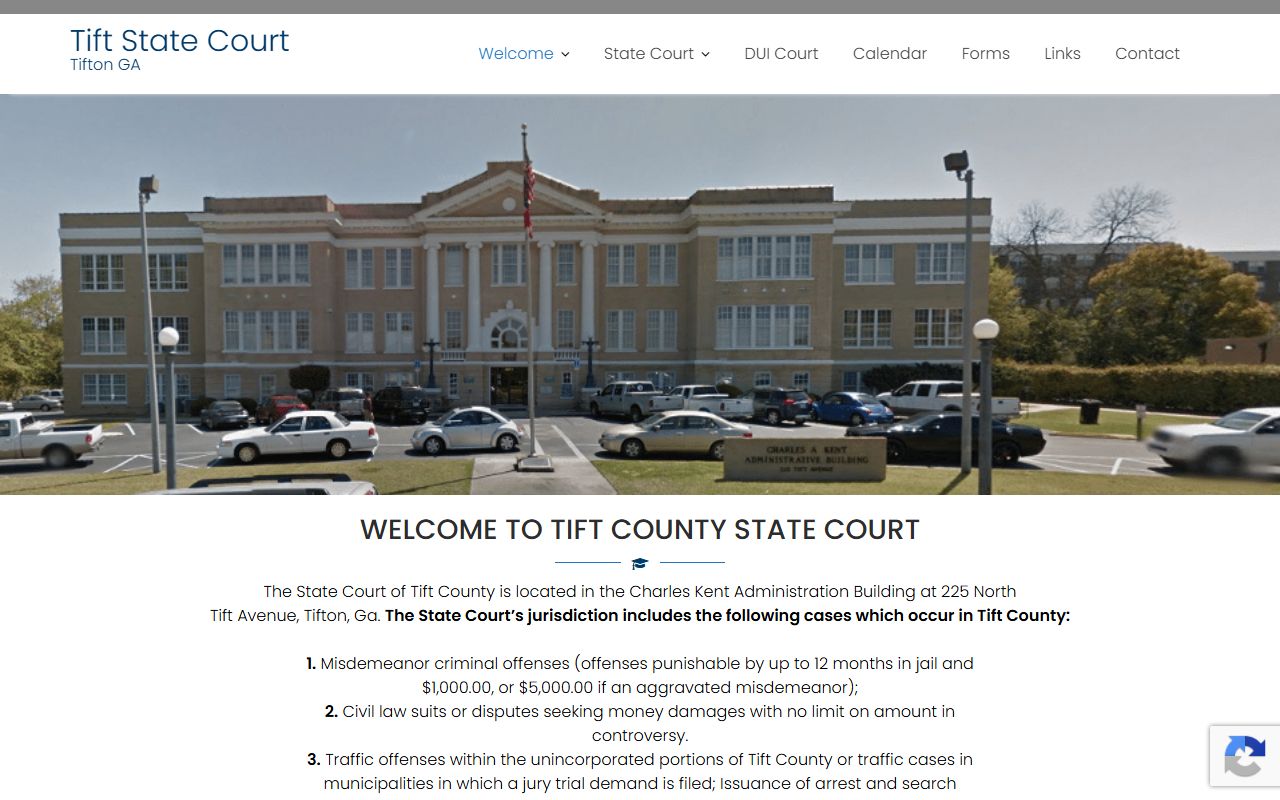
State Court is important because many arrest-to-charge records in Tift County are misdemeanor or traffic-related rather than felony Superior Court files.
Tift County Charging Documents
The charging document is the bridge between an arrest record and the court record. After an arrest, prosecutors decide what formal charge, if any, should be filed. For State Court misdemeanors, the research identifies the Solicitor-General as the office that investigates crimes, interviews victims and witnesses, files accusations, subpoenas witnesses, collects evidence, negotiates pleas, and tries cases. For felony matters, the District Attorney explains the felony charging path in Superior Court.
| Document | Used For | Tift County Context |
|---|---|---|
| Complaint or warrant filing | Initial sworn allegation or court process after an arrest or warrant matter | Magistrate Court issues arrest warrants and handles warrant hearings, bond hearings, and preliminary matters. |
| Accusation | Formal misdemeanor charging document filed by a prosecutor | The Solicitor-General handles State Court misdemeanor accusations, pleas, subpoenas, and trials. |
| Indictment | Formal felony charge returned through the grand-jury process | The District Attorney prosecutes Superior Court felony matters for Tift, Worth, Irwin, and Turner counties. |
The State Court Clerk page identifies the office that manages State Court filings, records duties, traffic line, and records service.
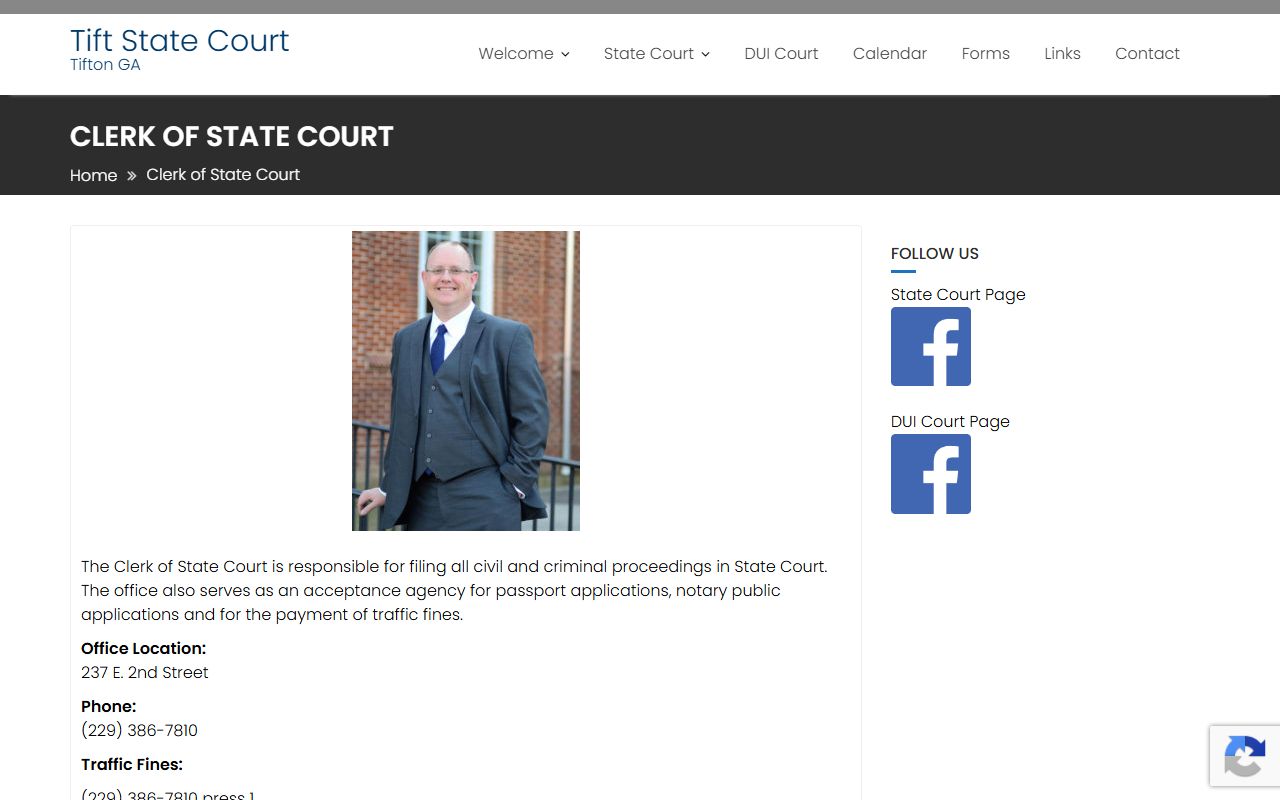
The clerk record source matters because a charge is not just a police allegation once it becomes a filed court accusation or case entry.
Find Tift County Charges After Arrest
There is no single public source that merges every arrest, booking, charge, plea, and sentence into one Tift County search. PeachCourt and Georgia eAccess route Superior and State electronic case access through provider accounts. The State Court FAQ says the Clerk of Court is the official keeper of Tift State Court records and gives a record-copy phone of 229-386-7937. Magistrate Court handles warrant and preliminary matters. The jail roster is a separate sheriff-linked roster for current custody and recent booking information.
- Start with the court most likely to hold the charge: Superior Court for felonies, State Court for misdemeanors, Magistrate Court for warrant and preliminary matters, or Municipal Court for city citations.
- Use the defendant name, case number, citation number, warrant number, or booking facts available from the arrest side.
- Read the formal charge list separately from bond, booking, and custody fields.
- Check whether each charge is pending, amended, reduced, dismissed, or tied to a plea or sentence.
- For booking and custody details, use the sheriff-linked jail roster or call the jail information line.
The State Court FAQ is the official source for the State Court records custodian and record-copy phone.
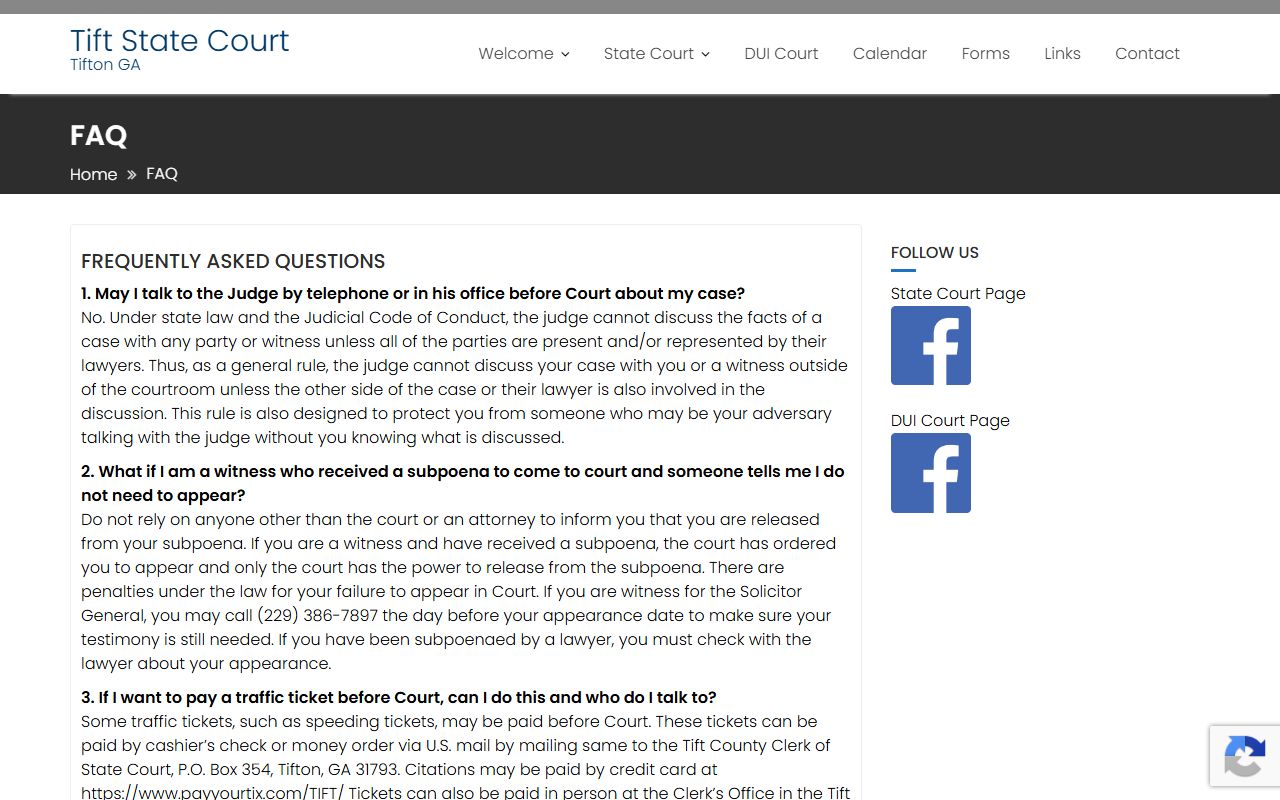
That FAQ helps separate court-record copies from the jail, sheriff, or police report channels used for arrest information.
Tift County Charge Status
A charge can change after filing. It may be amended to correct the count, reduced through plea talks, dismissed by the court, or marked nolle prosequi when the prosecutor does not proceed. One arrest can produce several counts, and each count can have a different status. That is why charge records should be read count by count rather than as a single arrest outcome.
| Status | What It Means | Record Caution |
|---|---|---|
| Pending | The filed charge is still open or awaiting the next court event. | Do not treat a pending charge as a conviction. |
| Amended | The wording, count, statute, or severity changed after filing. | Check both the original charge and the amended charge. |
| Reduced | The charge was lowered to a lesser offense or lesser severity. | The final disposition may differ from the arrest allegation. |
| Dismissed | The charge was ended by court action or prosecution decision. | Other counts in the same case may still remain. |
| Nolle prosequi | The prosecutor chose not to proceed on the charge. | Georgia records may still show the historical filing unless restricted. |
Note: A docket entry can show the current status, but a certified copy may be needed for formal proof of disposition.
Tift County Charges vs Convictions
Being charged is not the same as being convicted. A charge is the formal accusation filed with a court. A conviction follows a guilty plea, nolo contendere plea where treated as a conviction for the case, or verdict. The distinction matters for employment, licensing, housing, immigration, and record-restriction questions, but this private site is not a consumer reporting agency and the official court record must be checked before acting on a result.
| Point | Charge | Conviction |
|---|---|---|
| Stage | Filed accusation, indictment, complaint, citation, or count | Final guilt finding, accepted plea, or verdict |
| What it proves | Only that an allegation was filed | That the case reached a guilty outcome on that count |
| Where to verify | Clerk docket, charging document, prosecutor filing | Disposition, sentence, judgment, plea, or certified court copy |
| Can change | May be amended, reduced, dismissed, or not prosecuted | May still be appealed, corrected, or restricted if eligible |
Tift County Charge Pathways
Some charge records lead to specialized court handling. Tift County DUI/Drug Court is the confirmed local specialty court. The State Court site says the program began on January 1, 2017 under State Court Judge Herby Benson. The program is a partnership among the judge, Solicitor's Office, probation, law enforcement, court staff, treatment providers, and defense bar. It is relevant to charge records because eligible misdemeanor or DUI-related cases may have supervision, treatment, testing, sanctions, and incentives reflected in case events.
The Tift County DUI/Drug Court page gives the local program background, eligibility frame, phases, treatment, testing, sanctions, and incentives.
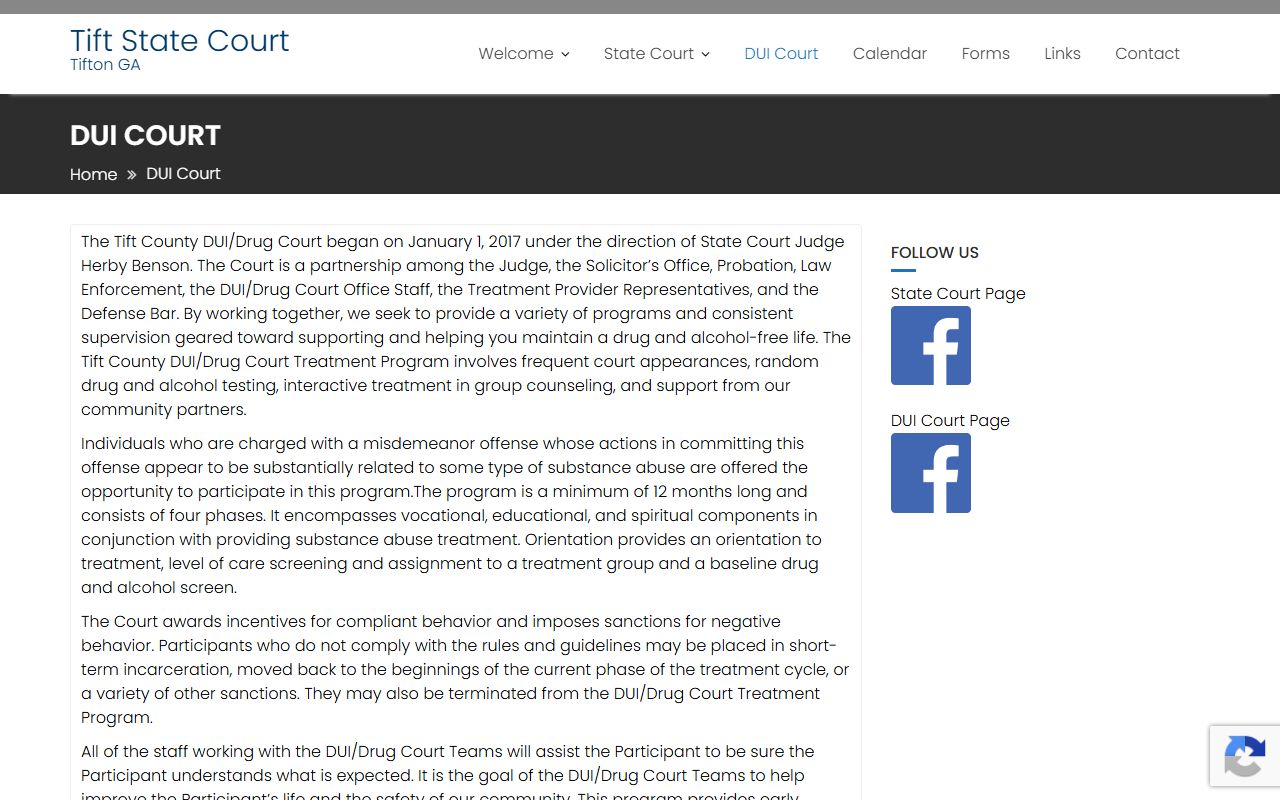
DUI/Drug Court information can explain why a charge record has program events beyond a simple plea and sentence entry.
The State Court Judge page also identifies Judge Herby Benson and references the DUI/Drug Court role.
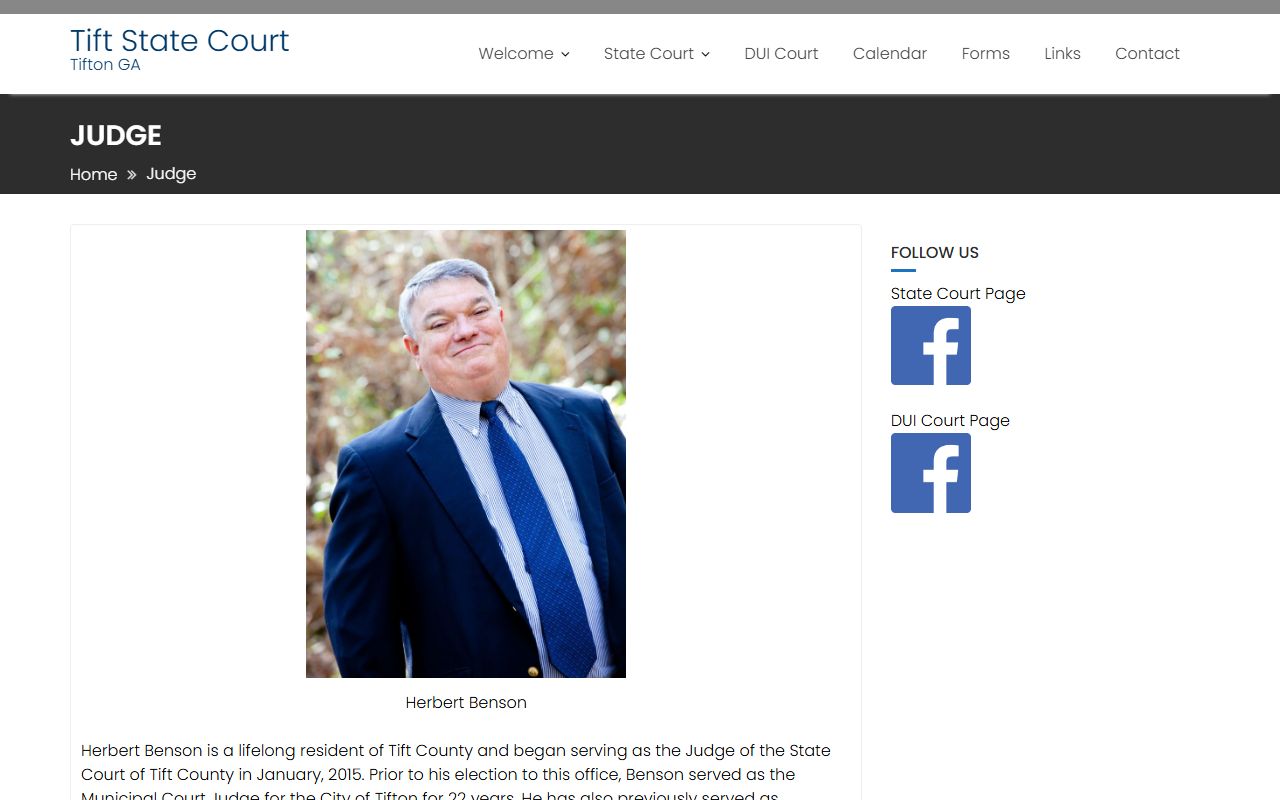
Judicial and specialty-court sources should be used for program context, not as proof that a person was convicted.
Tift County Prosecutor Roles
The charging office depends on the court. The Solicitor-General handles State Court misdemeanor prosecution, including accusations, evidence, subpoenas, pleas, and trials. The District Attorney handles felony matters for the Tifton Judicial Circuit. The Clerk of Court and State Court clerk functions hold filed court records, while law-enforcement agencies hold reports and arrest-side records. That split explains why a name search can find custody in one source, a charge in another, and a final sentence somewhere else in the court file.
- Accusation
- A charging document commonly used for State Court misdemeanor prosecution.
- Indictment
- A formal felony charge returned by a grand jury.
- Disposition
- The final or current result of a charge or case.
- Record restriction
- Georgia's process for limiting eligible criminal-history access, often called expungement in casual speech.
Restricted Tift County Arrest Records
Juvenile matters are not ordinary public arrest or charge records. The county publishes a Juvenile Court clerk contact page and a juvenile placement-objection form, but Georgia juvenile-record provisions restrict law-enforcement and court files. Adult criminal records may also be limited by sealing, record restriction, protected victim identifiers, Social Security numbers, financial account data, and other redactions under public-record exemptions.
The Tift County Juvenile Court page gives the local juvenile clerk contact and office information.
Juvenile source material should be treated as routing information only, not as permission to search juvenile case files like adult records.
The official-linked juvenile objection form is a narrow juvenile-court form tied to O.C.G.A. 15-11-215.
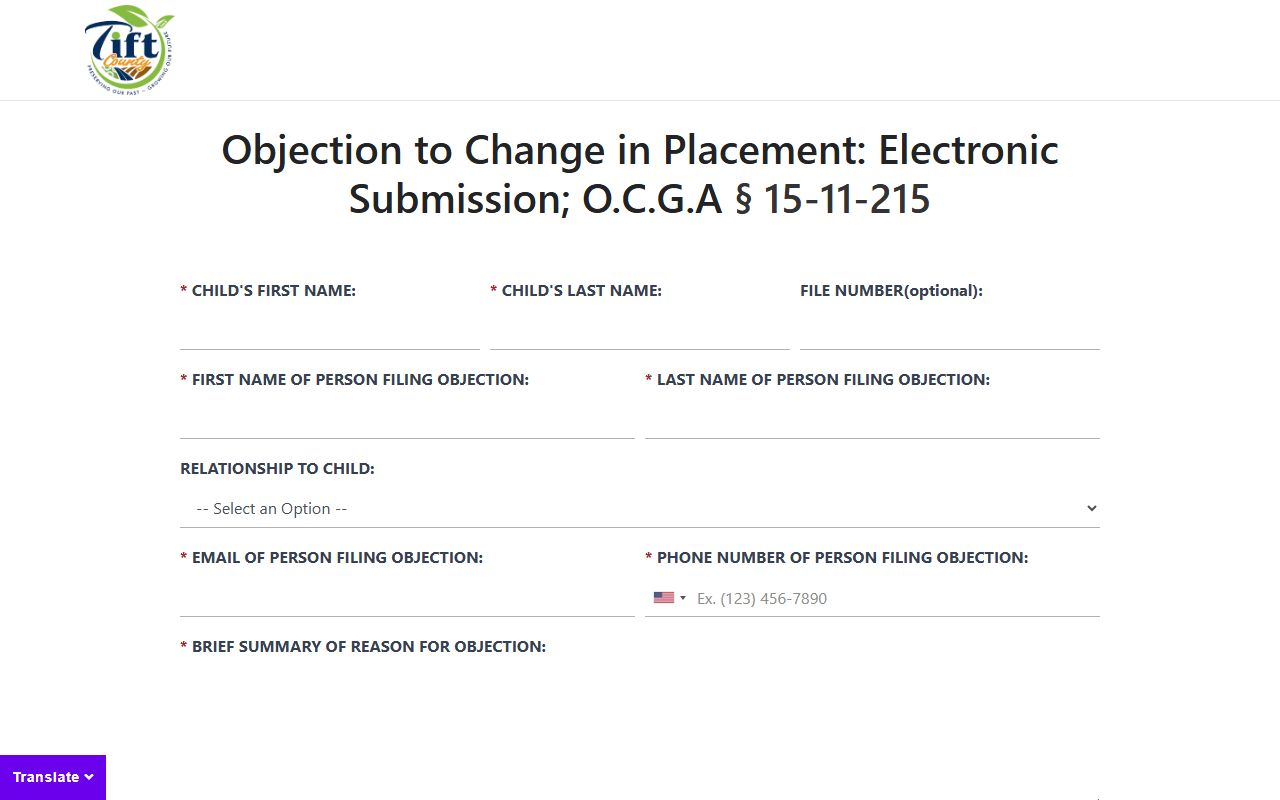
The form confirms a specific juvenile workflow but does not create a public juvenile charge lookup.
The Georgia juvenile records statute source is the statewide legal reference for juvenile hearing, record, and file access limits.
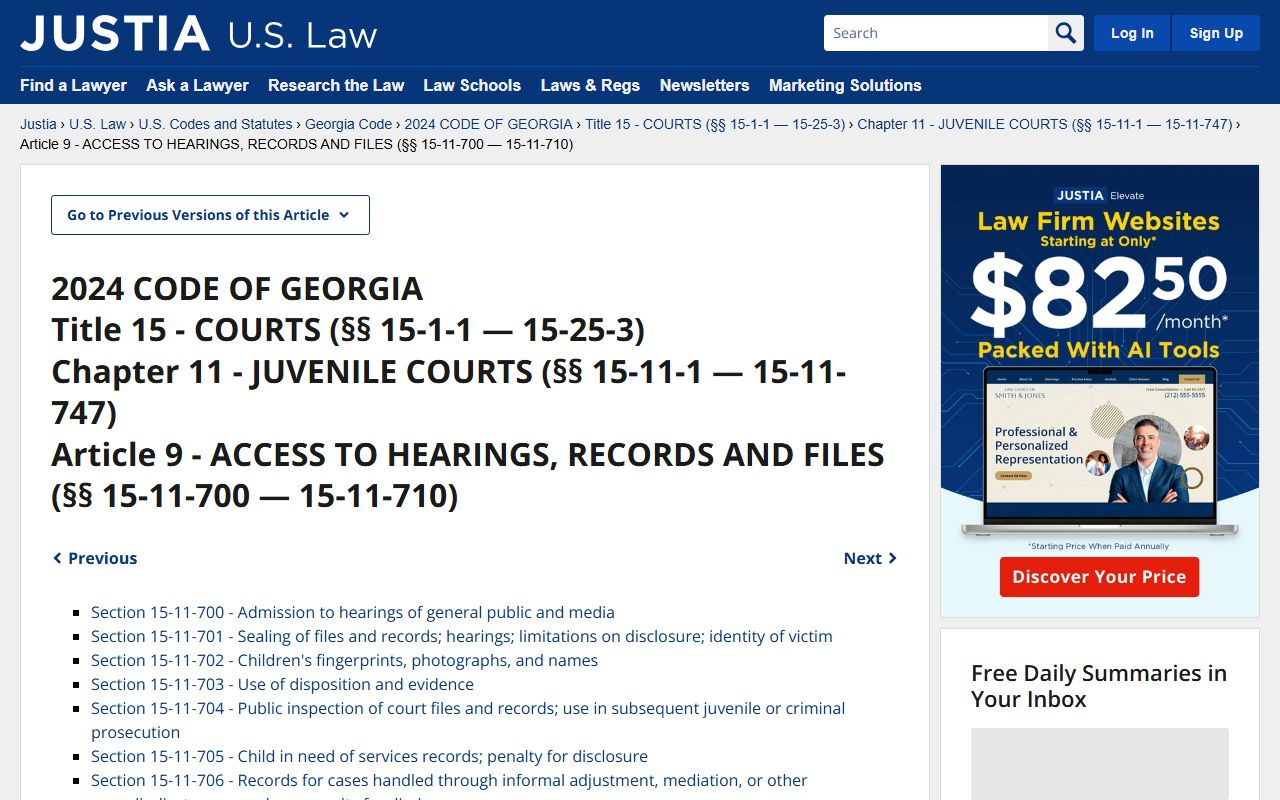
That statute source explains why juvenile arrest and charge records must be handled through restricted access rules.
Tift County Charge Restriction
Georgia commonly uses the term record restriction. The research states that O.C.G.A. 35-3-37 governs criminal history correction and restriction, and local Tifton Police materials point to prosecutor and arresting-agency processing. If a record falls into an eligible category, the person may request a form from the arresting agency. The form is completed by the person requesting restriction, the arresting agency, and the prosecuting attorney.
| Term | Meaning in This Context | Tift County Caution |
|---|---|---|
| Restricted | Georgia process limiting eligible criminal-history access for non-criminal-justice purposes. | Route depends on arresting agency and prosecutor approval. |
| Sealed | Court access is limited by law, rule, or court order. | Juvenile and protected records are not searched like ordinary adult cases. |
| Expunged | Common public word for removing access, but Georgia commonly uses record restriction. | Do not assume every court filing disappears from all official systems. |
The local route still depends on the source of the arrest and the court where the charge was filed. City police, sheriff, State Court, and Superior Court records do not all move through the same office.
| Record Issue | Likely Local Route | Research Limit |
|---|---|---|
| City police arrest | Tifton Police and the prosecutor tied to the case | City fee page lists record restriction and possible GBI fee. |
| Sheriff arrest | Tift County Sheriff's Office and prosecutor review | Sheriff public information lists record restriction at $25 per arrest. |
| State Court misdemeanor | Solicitor-General and State Court record custodian | Eligibility must be confirmed through official process. |
| Superior Court felony | District Attorney and Superior Court record custodian | No local sealing fee table was found beyond police and sheriff restriction fees. |
Record restriction is not the same as deleting every trace of a court file. Ask the arresting agency, prosecutor, and clerk what will be restricted, what remains visible to criminal-justice agencies, and whether a certified disposition is needed.